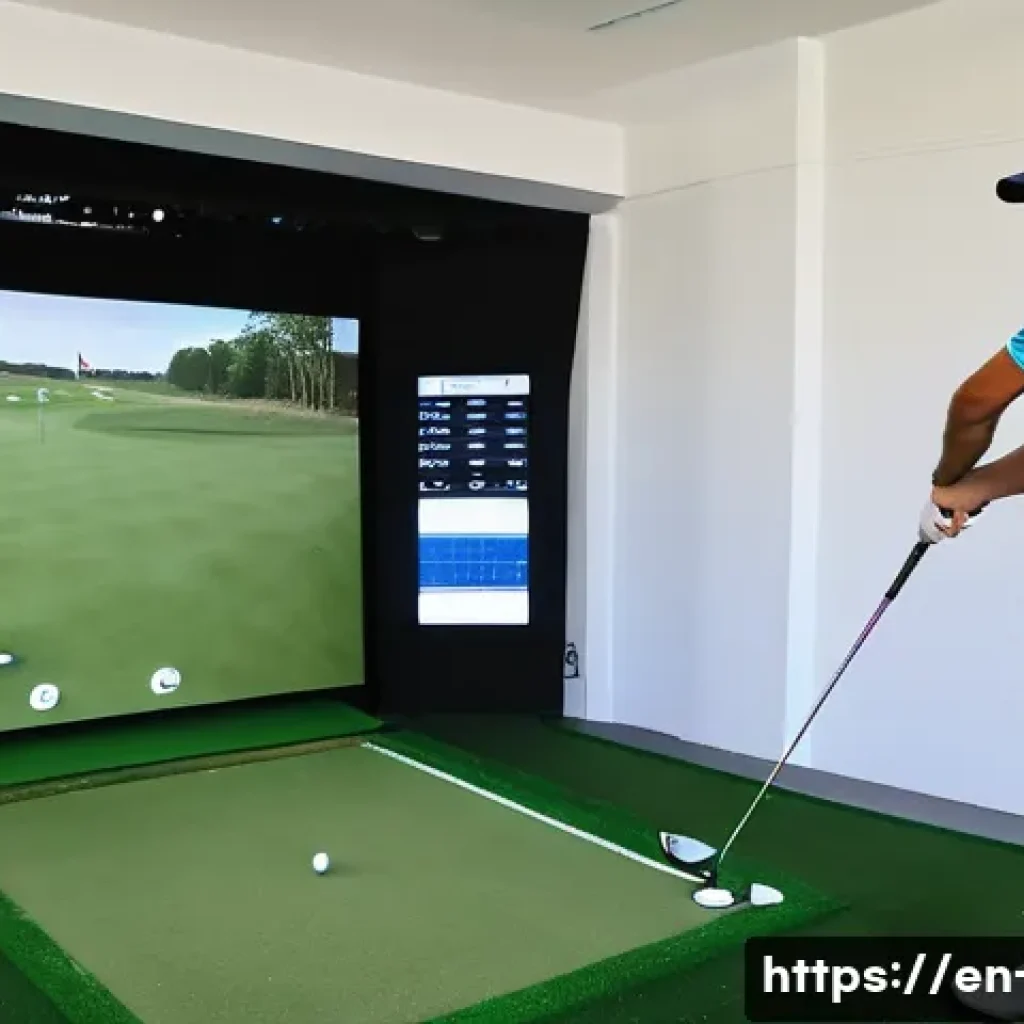
Ever found yourself utterly baffled by why your golf ball just won’t go where you want it to? Trust me, I’ve been there, staring down the fairway feeling like my swing belonged on a comedy reel rather than a PGA tour highlight.

It’s a common frustration, and honestly, it used to drive me nuts. But what if I told you that cracking the code to a consistent, powerful swing isn’t about endless hours on the range blindly hitting balls anymore?
The game has changed, thanks to incredible advancements in tech that can actually pinpoint *exactly* what’s going wrong – and better yet, how to fix it with precision.
We’re seeing a fascinating shift towards personalized, data-driven coaching that feels like something out of a futuristic sports movie, making the dream of a perfect swing more attainable than ever.
I remember when I first started exploring these new analytical tools; it felt like having a pro coach right there in my pocket, giving me feedback I could truly understand and act on.
It wasn’t just about general advice anymore, but highly personalized insights into my unique swing flaws. The sheer joy of seeing my drives straighten out and my irons connect sweetly was a game-changer, not just for my score, but for my overall enjoyment of the game.
If you’re tired of guessing and ready to transform your golf game with smart, data-driven approaches, then you’re in the right place. We’re talking about leveraging cutting-edge analysis to unlock your true potential, making every swing count.
Let’s find out how to achieve that consistent, powerful golf swing you’ve always dreamed of.
Unlocking Your Swing’s Secrets: It’s All About the Data!
Honestly, for years, I felt like I was just flailing in the dark. I’d hit a great shot one day, then completely lose it the next, and I had absolutely no idea why. It was frustrating, to say the least, and it took a lot of the fun out of the game for me. Then, I dipped my toes into the world of golf swing analysis technology, and let me tell you, it was like someone finally flipped on the lights! No more guessing, no more vague advice from well-meaning friends. Suddenly, I had tangible numbers, slow-motion replays, and clear visuals of what my body was *actually* doing. It’s a paradigm shift, moving from subjective feel to objective reality, and it empowers you to understand the cause and effect of every single move you make. What I’ve found is that knowing *why* your ball slices or hooks, or why you’re losing power, isn’t just interesting; it’s absolutely critical to making lasting improvements. This isn’t about becoming a robot, but rather understanding your unique swing DNA so you can fix flaws and amplify strengths with surgical precision. The sheer joy of finally connecting with the ball consistently and seeing it fly true? Priceless.
Beyond the Basics: Seeing What You Can’t Feel
- For the longest time, I relied solely on how my swing “felt.” If it felt good, it must be good, right? Wrong! What feels comfortable isn’t always efficient or effective. Tech tools like high-speed cameras and launch monitors reveal the subtle movements and clubhead dynamics that are imperceptible to the human eye, even your own.
- Imagine seeing your clubface angle at impact, your swing path, or your attack angle in precise numerical terms. It’s like getting an X-ray of your swing, showing you exactly where the breakdown occurs. This objective feedback completely removes the guesswork and allows you to target specific areas for improvement, rather than just vaguely trying to “swing better.”
The “Aha!” Moment: When Numbers Tell the Whole Story
- I remember my first session with a truly advanced launch monitor. I thought I was hitting down on the ball, but the data showed my attack angle was actually shallow or even slightly ascending with my irons. Talk about an “aha!” moment! That single piece of data immediately changed my focus on drills and the feeling I was trying to create.
- This immediate, data-backed feedback loop is what makes modern golf tech so revolutionary. You don’t have to wait until your next round to see if a change worked; you know instantly. This speeds up the learning process dramatically and builds confidence because you’re working with facts, not just hopeful hunches.
Your Personal Caddie of Code: Decoding Swing Data
Gone are the days when a golf lesson meant a pro watching you hit a few balls and offering some general pointers. While valuable, it lacked the objective depth that today’s technology brings to the table. Modern swing analysis isn’t just about collecting data; it’s about interpreting it in a way that’s meaningful *to you*. Think of these sophisticated tools as your personal caddie of code, constantly monitoring, measuring, and providing actionable insights. It takes the subjective nature out of coaching and injects a level of scientific precision that was once only available to tour pros. When you understand your club speed, ball speed, launch angle, spin rate, and all the nuanced metrics that define your golf shot, you gain an incredible advantage. This wealth of information, when properly analyzed, paints a vivid picture of your swing mechanics, highlighting both your strengths to build upon and the specific weaknesses that are costing you strokes. It’s truly transformative to finally grasp the intricate dance between your body, the club, and the ball.
Launch Monitors: The Ball’s True Confessions
- Oh, launch monitors! These incredible devices are like truth serums for your golf ball. They capture what happens the instant the club meets the ball, giving you critical data points such as ball speed, launch angle, spin rate, carry distance, and much more. This data is non-negotiable proof of your strike.
- For me, seeing my spin rate too high or too low for a particular club instantly tells me something about my clubface presentation or angle of attack. It’s not just about distance; it’s about optimizing the flight characteristics for maximum efficiency and control. Trust me, once you start using one, you’ll wonder how you ever played without it.
3D Motion Capture: Unmasking Your Body’s Role
- While launch monitors tell you about the ball, 3D motion capture systems delve deep into your body’s movements throughout the swing. Imagine sensors tracking your torso rotation, hip turn, wrist angles, and even your weight shift in real-time. It’s like having a biomechanics lab in your garage!
- This technology was a huge eye-opener for me. I *thought* I was rotating my hips effectively, but the 3D data showed I was actually stalling, leading to an ‘over-the-top’ move. Seeing that visual representation of my body’s mechanics helped me understand exactly where to focus my physical efforts to create a more efficient and powerful movement pattern.
Crafting Your Perfect Practice: Smart Drills, Real Gains
Let’s be real, blindly hitting a bucket of balls at the range, day after day, expecting different results, is the definition of insanity in golf. I’ve been there, trust me. It’s exhausting and, frankly, not very effective for long-term improvement. The true power of golf swing analysis technology isn’t just in identifying flaws; it’s in revolutionizing *how* you practice. Once you know exactly what’s going wrong, you can stop wasting time on generic drills and instead implement highly targeted, data-driven practice sessions that address your specific issues. This personalized approach means every swing you take has a purpose, every drill is designed to correct a known fault, and every session moves you closer to your goals. It transforms practice from a chore into an exciting journey of discovery and improvement, where you see tangible progress with each data point. This focused effort not only makes your practice more efficient but also significantly more enjoyable because you’re actively engaged in solving your own swing puzzle.
From Diagnostics to Drills: A Seamless Transition
- Once the tech has diagnosed your specific swing flaw – maybe it’s an out-to-in swing path, an open clubface, or too much lateral sway – the next step is finding the right drills. And this is where the real magic happens! Instead of guessing, you can use the tech to validate if your chosen drill is actually making the desired change.
- For example, if your issue is a ‘casting’ motion at the top of your swing, you can try a drill designed to maintain lag, and immediately check the data to see if your wrist angles are improving. It’s immediate feedback that guides your learning process.
Feedback Loops That Fast-Track Progress
- The beauty of practicing with technology is the instantaneous feedback loop. You perform a drill, hit a shot, and instantly see the numbers change (hopefully for the better!). This immediate reinforcement or correction is incredibly powerful for motor learning.
- I’ve found that this process helps to ingrain new movements much faster than traditional methods. It’s like having a personal coach constantly reminding you what to feel and do, but without them actually being there. It truly empowers you to be your own best teacher.
Finding Your Tech Match: What’s Right For Your Game?
Walking into a golf store or browsing online for swing analysis tech can feel overwhelming, like trying to navigate a foreign language without a phrasebook. There’s a dizzying array of options, from pocket-sized gadgets to full-blown simulator setups, and it’s easy to get lost in the jargon and features. But don’t despair! The key is to understand your own needs, your budget, and what kind of data will truly help *your* specific golf game. Are you primarily looking to improve your driving distance, fix a persistent slice, or dial in your iron distances? Each goal might lean towards a different type of technology. I’ve personally experimented with various tools, and what I’ve learned is that the most expensive isn’t always the “best” for everyone. Sometimes, a simpler, more focused device can provide exactly the insights you need without breaking the bank or overwhelming you with unnecessary data. It’s about smart investment, not just spending money.
Comparing the Contenders: What Each Tool Brings
| Technology Type | Key Data Points | Ideal User | My Personal Take |
|---|---|---|---|
| Launch Monitors (e.g., Trackman, Foresight, FlightScope, Garmin Approach) | Ball Speed, Club Speed, Launch Angle, Spin Rate, Carry Distance, Attack Angle, Club Path, Face Angle | Serious golfers, those looking for comprehensive shot data, fitting, and simulator play. | Absolutely essential for anyone serious about understanding their ball flight. The insights into spin and launch are game-changers! |
| 3D Motion Sensors (e.g., K-Vest, Swing Catalyst, Zepp Golf) | Body Rotation, Weight Shift, Hip/Shoulder Turn, Wrist Angles, Swing Plane, Tempo | Golfers needing to analyze body mechanics, understand sequencing, or correct specific movement flaws. | These are incredible for pinpointing *why* you’re getting certain ball flight numbers. A bit more advanced but incredibly revealing. |
| High-Speed Cameras (e.g., iPhone Slow-Mo, dedicated swing cameras) | Visual Swing Path, Top of Backswing Position, Impact Position, Release Point | Visual learners, those on a budget, or looking for quick visual feedback. | Don’t underestimate the power of a good slow-motion video! It’s an accessible way to see major visual flaws in your swing. |
| Pressure Plates/Force Platforms (e.g., Swing Catalyst, BodiTrak) | Ground Reaction Forces, Weight Transfer, Center of Pressure (COP) | Advanced players, those working on power, stability, and lower body mechanics. | Mind-blowing for understanding how you generate power from the ground up. It shows you the true source of your speed. |
Budgeting for Breakthroughs: Smart Investments
- You don’t need to spend thousands to get valuable insights. Many excellent personal launch monitors are available at more accessible price points now, offering core data points that are hugely beneficial. Start with what helps you track your primary goals.
- Consider your access to facilities. If you frequent a driving range with simulators, you might not need your own top-tier launch monitor right away. However, if you practice mostly alone, a personal device could be a fantastic investment.
Your Swing’s Evolution: From Frustration to Fluidity
I genuinely believe that the evolution of golf instruction, powered by these incredible technological advancements, has completely changed the game for amateur golfers like us. We’re no longer confined to the old-school methods of trial and error, hoping to stumble upon a breakthrough. Instead, we have a clear, data-driven roadmap to improvement that feels incredibly empowering. It’s moved me from a place of constant frustration and bewilderment to one of confident, purposeful practice. The feeling of hitting a truly flush shot, knowing exactly what you did correctly, is addicting. And seeing my scores steadily improve, shot by shot, round by round, has injected so much more joy and satisfaction into my time on the course. This isn’t just about shaving strokes; it’s about understanding your potential, pushing your boundaries, and enjoying the process of mastery. If you’re ready to stop guessing and start knowing, to transform your golf game with smart, data-driven approaches, then embracing this technology is your next big step. Trust me, your future self, standing over that perfect shot, will thank you.
Building Better Habits: Consistency is Key
- Once you identify and start correcting flaws with technology, the next step is consistent, deliberate practice to ingrain those new movements. This isn’t a quick fix; it’s about building lasting habits.
- What I’ve found is that regularly checking in with my tech, even for short sessions, helps reinforce the positive changes and prevents old habits from creeping back in. It’s like having a watchful eye constantly ensuring you stay on track.
The Mental Edge: Confidence from Knowing
- Perhaps one of the biggest, yet often overlooked, benefits of using swing analysis technology is the confidence it instills. When you truly understand your swing, its strengths, and its weaknesses, you step onto the course with a completely different mindset.
- No more questioning every shot or feeling defeated after a bad one. Instead, you analyze, adjust, and move forward, knowing you have the tools and understanding to self-correct. That mental resilience is absolutely invaluable in golf.
Integrating Tech Seamlessly: Making it Part of Your Routine
When I first started dabbling with golf tech, I’ll admit, it felt a little clunky and intimidating. I was worried it would complicate my practice or become another chore. But what I’ve discovered is that integrating these tools into your regular routine can actually make your practice sessions *more* efficient and enjoyable, not less. It’s about finding smart ways to weave technology into your warm-ups, your range sessions, and even your post-round analysis. You don’t need a full-blown science lab every time you hit a ball, but even a quick check-in with a portable device can provide valuable insights that build over time. Think of it less as an intrusive gadget and more as an extension of your own senses, providing a deeper understanding of your game. The goal isn’t to be dependent on tech, but to leverage it to gain awareness and accelerate your learning curve. It’s amazing how quickly you can adapt to using these tools, and before you know it, they become a natural, invaluable part of your golf journey.

Quick Checks and Deep Dives: Balancing Your Approach
- You don’t always need an hour-long data deep dive. Sometimes, a 10-minute session with a portable launch monitor just checking your smash factor or club path is enough to ensure you’re grooving the right feeling.
- Then, schedule more intensive sessions for when you’re specifically working on a swing change or diagnosing a persistent issue. This balanced approach prevents burnout and keeps the tech feeling helpful, not burdensome.
Consistency Across Locations: Home, Range, Course
- One of the beauties of modern, portable tech is that you can often get consistent data whether you’re at home with a net, at the driving range, or even on the course (though usually for practice swings or specific shots, not general play).
- This allows for a holistic view of your game and ensures that the improvements you make in practice translate directly to performance on the course. It’s incredibly reassuring to know your practice efforts are paying off in real-world scenarios.
The Future is Now: Continuous Improvement in Your Hands
The pace at which golf technology is advancing is absolutely staggering, and it means that the path to continuous improvement is more accessible than ever before. We’re talking about tools that used to be exclusive to PGA tour pros or high-end teaching academies now being available to the average enthusiastic golfer. It’s truly a thrilling time to be involved in the game! What this really means for *your* game is that you no longer have to settle for mediocrity or accept persistent flaws as “just part of your swing.” You have the power to analyze, understand, and refine every single aspect of your game with incredible precision. This isn’t just about fixing what’s broken; it’s about unlocking untapped potential and discovering new levels of performance you might never have thought possible. I’ve personally seen my handicap drop, my consistency soar, and my enjoyment of golf multiply exponentially since embracing these innovations. This journey of discovery and mastery is ongoing, and with the right tech by your side, the sky’s the limit for what you can achieve on the golf course. So, grab your gear, dive into the data, and get ready to experience golf like never before!
Staying Updated: The Ever-Evolving Tech Landscape
- Golf tech isn’t static. New devices, software updates, and analytical approaches are constantly emerging. Keeping an eye on reviews and industry news ensures you’re leveraging the latest and greatest tools to benefit your game.
- I’m always checking out what’s new, because sometimes a seemingly small update can provide a massive insight or improve the user experience dramatically. It’s an exciting space to be in!
The Community Factor: Sharing Insights and Progress
- One unexpected benefit I’ve found is the thriving online community around golf tech. Sharing data, discussing interpretations, and troubleshooting with other enthusiasts can be incredibly helpful and motivating.
- It’s a fantastic way to learn from others’ experiences, get different perspectives on your own data, and feel connected to a larger group of golfers who are all striving for improvement through smart practice.
Wrapping Things Up
Stepping back and looking at my own golfing journey, embracing swing analysis technology has truly been a game-changer. It’s like I finally got a personalized instruction manual for *my* swing, moving me from hopeful guesswork to confident, targeted improvement. The sheer satisfaction of understanding exactly why a shot behaved the way it did, and then having the tools to refine it, has reignited my passion for the game in ways I never expected. This isn’t just about shaving strokes (though that’s a fantastic bonus!); it’s about connecting with the sport on a deeper, more analytical level, which, surprisingly, makes it even more fun and rewarding. If you’ve ever felt stuck or frustrated with your progress, I can honestly tell you, this is the path to unlocking a more consistent, more powerful, and ultimately, a much more enjoyable golf game.
Handy Tips You’ll Be Glad You Knew
1. Don’t feel pressured to buy the most expensive gear right out of the gate. Many affordable personal launch monitors and even high-speed phone cameras offer incredible insights that can dramatically help your game. Start with what fits your budget and addresses your immediate concerns, and you can always upgrade later.
2. Resist the urge to dive into every single data point at once. It’s easy to get overwhelmed! Instead, pick one or two key metrics that are directly related to your biggest swing flaw (e.g., club path for a slice, attack angle for inconsistent iron strikes) and focus on improving those first. Gradual mastery is far more effective than trying to fix everything simultaneously.
3. While technology provides invaluable objective data, remember that a skilled coach can help interpret that data for *your* unique swing and provide tailored drills. Think of technology as your silent, objective assistant, and a coach as the wise mentor who translates the data into actionable steps. The best results often come from combining both.
4. Consistency is king in golf, both on the course and in practice. You’ll see far more progress by doing short, focused practice sessions (even 15-20 minutes) with your tech several times a week than by doing one long, infrequent session. Regular feedback helps ingrain new movements much faster and prevents old habits from creeping back in.
5. Always, always balance the numbers with how your swing *feels*. Technology tells you *what* is happening, but your body needs to learn *how* to make it happen. Use the data to guide your feels, but trust your physical sensations as you develop a more efficient and repeatable swing. The ultimate goal is to feel confident and effective, not just to hit specific numbers.
Key Takeaways
Ultimately, golf swing analysis technology demystifies the game, turning subjective feelings into objective facts. It empowers you with actionable data, leading to smarter practice and significantly faster improvement. From my own experience, this isn’t just about tweaking a swing; it’s about gaining a deep understanding of your own mechanics, boosting your confidence, and making the entire game of golf infinitely more enjoyable and rewarding. It’s an investment not just in gear, but in your long-term golfing satisfaction and continuous evolution.
Frequently Asked Questions (FAQ) 📖
Q: How does this technology truly pinpoint and fix my specific swing flaws, unlike traditional coaching methods?
A: You know, for years, I felt like I was constantly guessing with my swing. I’d get tips like “keep your head down” or “smooth out your tempo,” and while well-intentioned, they often felt too vague to really make a lasting difference.
That’s where this new wave of tech comes in, and honestly, it’s a revelation. Instead of relying on someone’s eye or your own ‘feel,’ these systems use super precise sensors and high-speed cameras to capture every single detail of your swing.
We’re talking about things like your club path, face angle at impact, swing speed, attack angle, and even how your body moves throughout the swing – things you simply can’t see with the naked eye.
It’s like having an X-ray vision into your swing! What I’ve found personally is that this data doesn’t just tell you what you’re doing, but often why you’re doing it.
For example, my frustrating slice wasn’t just about “coming over the top”; the data showed my club was actually too steep on the downswing, causing an out-to-in path and an open face.
Once I saw those numbers and visuals, and had targeted drills to fix that specific issue, the improvement was almost immediate and, more importantly, consistent.
It cuts out all the guesswork and gives you a clear, data-backed roadmap to improvement.
Q: What are some examples of these game-changing golf analysis tools I should actually know about or look for?
A: Oh, there are some truly incredible tools out there now that have totally revolutionized how we approach swing improvement! On the more professional end, you often hear about launch monitors like TrackMan or Foresight Sports’ GCQuad.
These are amazing because they use radar or high-speed cameras to give you incredibly detailed data on your ball flight – things like carry distance, spin rate, launch angle, and even the exact path of your clubhead and face angle at impact.
They’re what the pros use, but many local pro shops and indoor facilities now have them, making them accessible for lessons. Then you have 3D motion capture systems like K-Vest, which put sensors all over your body to show you exactly how your hips, shoulders, and arms are moving throughout the swing.
This is fantastic for understanding your body’s sequence and identifying any inefficiencies. For something more portable and often more budget-friendly, there are swing sensors that attach to your club, like Arccos Golf (which also tracks your shots on the course) or Blast Motion for putting and short game.
I’ve personally experimented with a few of these, and even the more accessible ones offer valuable insights that can seriously help you identify patterns and make smarter practice decisions.
It’s not about replacing a great coach, but giving both you and your coach invaluable, objective information.
Q: Is this data-driven approach truly beneficial for golfers of all skill levels, or is it mostly for serious players and pros?
A: That’s a fantastic question, and one I hear a lot! The short answer is: absolutely, this approach is for everyone. And honestly, I think it might be even more transformative for recreational golfers and those just starting out.
Here’s why: If you’re a beginner, imagine being able to build good habits from day one, avoiding years of ingrained flaws that are tough to unlearn. Data can guide you to a more efficient and repeatable swing much faster.
For the average golfer, stuck around a certain handicap, this technology is a breakthrough for identifying that one or two critical flaws holding them back.
I know a guy who was always slicing, convinced it was his grip. But after a session with a launch monitor, he found out his clubface was consistently open at impact, even with what he thought was a good grip.
A simple adjustment based on that data, and his ball flight completely changed. And yes, for serious amateurs and pros, it’s about fine-tuning, gaining those extra few yards, or perfecting consistency under pressure.
What I’ve seen is that whether you’re breaking 100 or trying to break par, understanding your own unique swing mechanics through data empowers you to practice smarter, not just harder, and truly unlock your potential on the course.